Generational Differences: Women 50+ vs. Women Under 50
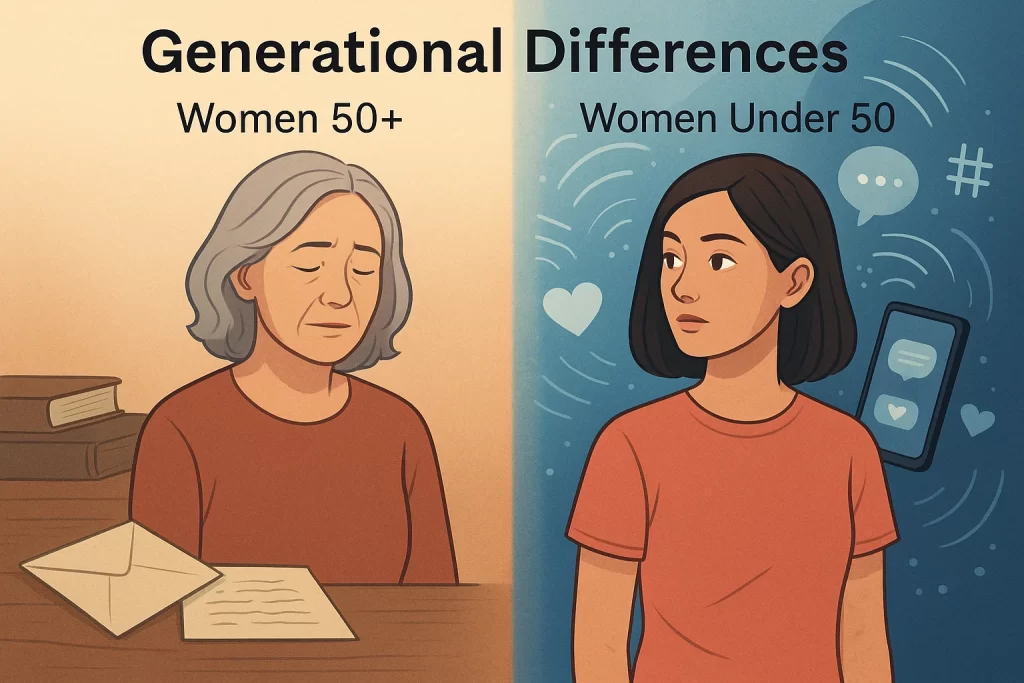
When it comes to understanding trauma, healing, and emotional expression, women’s experiences differ sharply across generations. The contrast between women over 50 and those under 50 highlights the profound impact of changing times, technology, and cultural narratives. Here’s a look at some key differences:
1. Language Access
Women over 50 grew up with little exposure to terms related to neurodivergence (ND) or trauma. The language to describe experiences such as anxiety, sensory overload, or even simple emotional states was rare or nonexistent. In contrast, younger women—those under 50—have grown up immersed in the digital world, where mental health, trauma, and neurodivergence are daily topics of discussion on social media and beyond. This increased exposure has equipped them with a richer vocabulary for self-understanding, but it can also lead to information overwhelm.
2. Cultural Silence
Older generations of women were raised with a strong expectation of emotional repression and obedience. Expressing feelings or questioning authority was often discouraged, leaving many to navigate pain and confusion alone. By comparison, younger women have been introduced to emotional language much earlier. However, while they may “know” the right words, many still struggle to embody or deeply feel those emotions—a gap between intellectual understanding and lived experience.
3. Tech Influence
For women 50 and up, childhood was largely spent offline, with slower paces, less constant stimulation, and more opportunities for reflection (or, sometimes, isolation). In contrast, women under 50 are the first generations raised with online saturation—smartphones, social media, and a relentless stream of information. This connectivity can support learning and community, but it also leads to a chronically overstimulated nervous system, making it harder to process emotions and stress.
4. Social Role Expectations
Women over 50 were often cast as caretakers and silent sufferers. Their identities were tied to service, self-sacrifice, and putting others’ needs first. In contrast, younger women are more likely to be cast as performers—expected to excel at work, home, and online, with high-pressure standards for achievement and visibility. The burden of “having it all” can be as heavy as silence, just in a new form.
5. Healing Orientation
For older women, healing often begins later in life, through grief, reclamation, or a late-stage awakening to personal needs and boundaries. The process can feel like recovering lost time or missed opportunities. For younger women, there is a stronger drive toward self-improvement, “fixing” oneself quickly, and urgent searches for answers. This drive, however, can sometimes tip into burnout and chronic dissatisfaction.
6. Emotional Themes
Women over 50 often report feelings of shame, confusion, and (when healing begins) relief. Many spent decades wondering if their struggles were unique or somehow “wrong.” Younger women, on the other hand, frequently report anxiety, overidentification with labels, and emotional dysregulation—struggling to find balance amid the constant push for self-knowledge and societal performance.
In summary:
Generational shifts have brought new tools, language, and awareness to younger women, but also new challenges. Older women carry the weight of cultural silence and repression, but also the wisdom of lived experience and eventual relief. Both generations face unique paths to healing, and bridging the gap between them can offer powerful lessons for all.