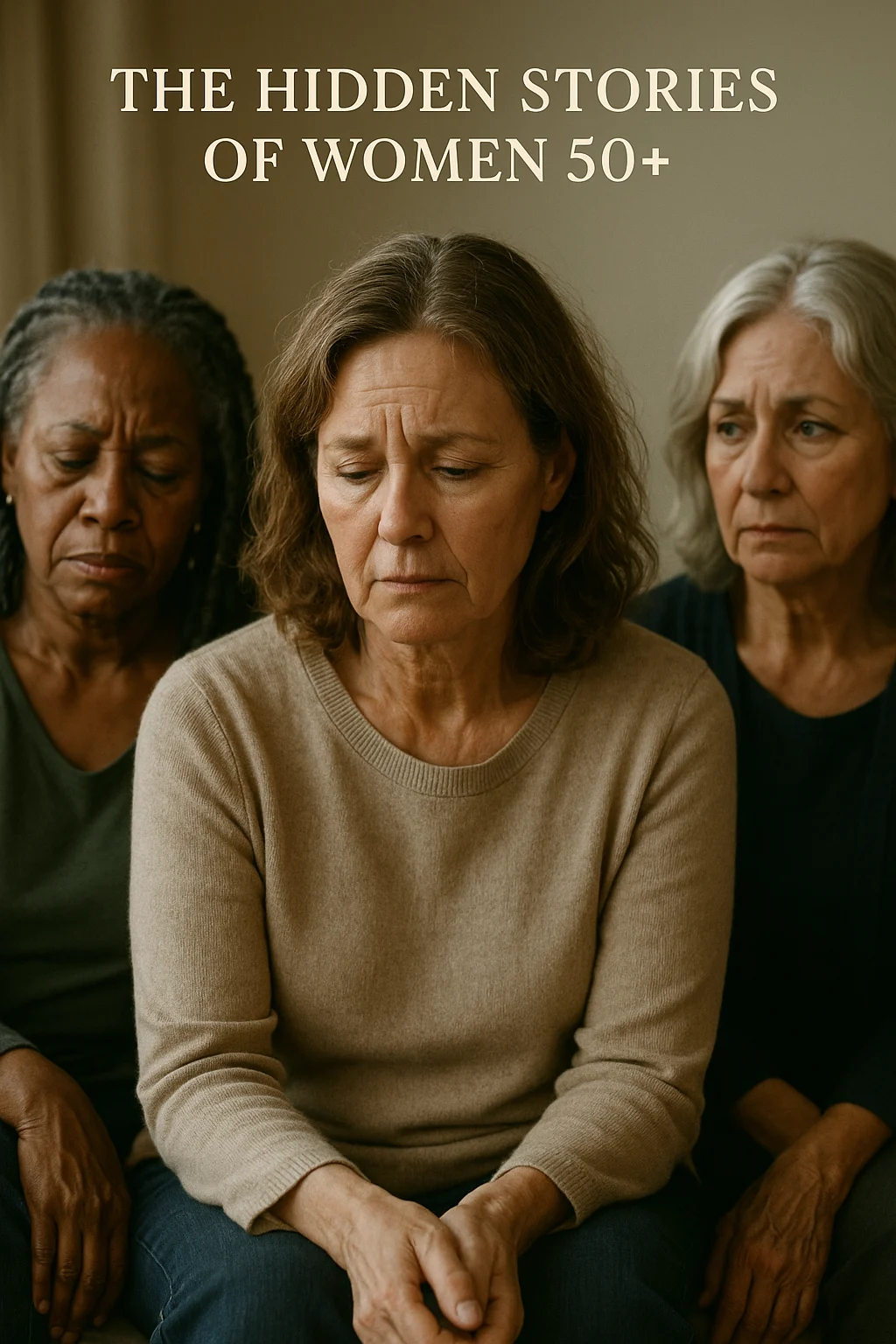
You are not alone. Our stories matter.
Share your experience and help rewrite the narrative for women.
For decades, women who didn’t “fit the mold” were labeled as too much, too emotional, too sensitive—or not enough. Our true experiences, challenges, and gifts were left out of the story because the story was never written with us in mind.
This is not a diagnosis. This is a reckoning—a turning toward the truth, and a return to the wisdom within.
For years, the systems meant to help us were built without women at the center. Science, psychology, and medicine relied on research that studied boys and men, while girls and women were unseen, misdiagnosed, or told to try harder. Autism, ADHD, and the many faces of neurodivergence wore a different mask in us—so we masked ourselves to survive.
But we were never broken. We were never missing anything. We were simply never included.
Now, as women 50 and beyond, we have an opportunity to finally see ourselves—clearly, compassionately, and with new understanding. We can name the patterns, peel off the old labels, and remember the truth that was hidden in plain sight: our struggles were never personal failures. They were signs of a system that forgot us, and of a sensitivity and brilliance that are our birthright.
This series is not just about information. It is a call to remembrance and a pathway home.
You are not alone. Your story matters. Your healing is possible.
Explore the series below:
Article 1: The Invisible Epidemic
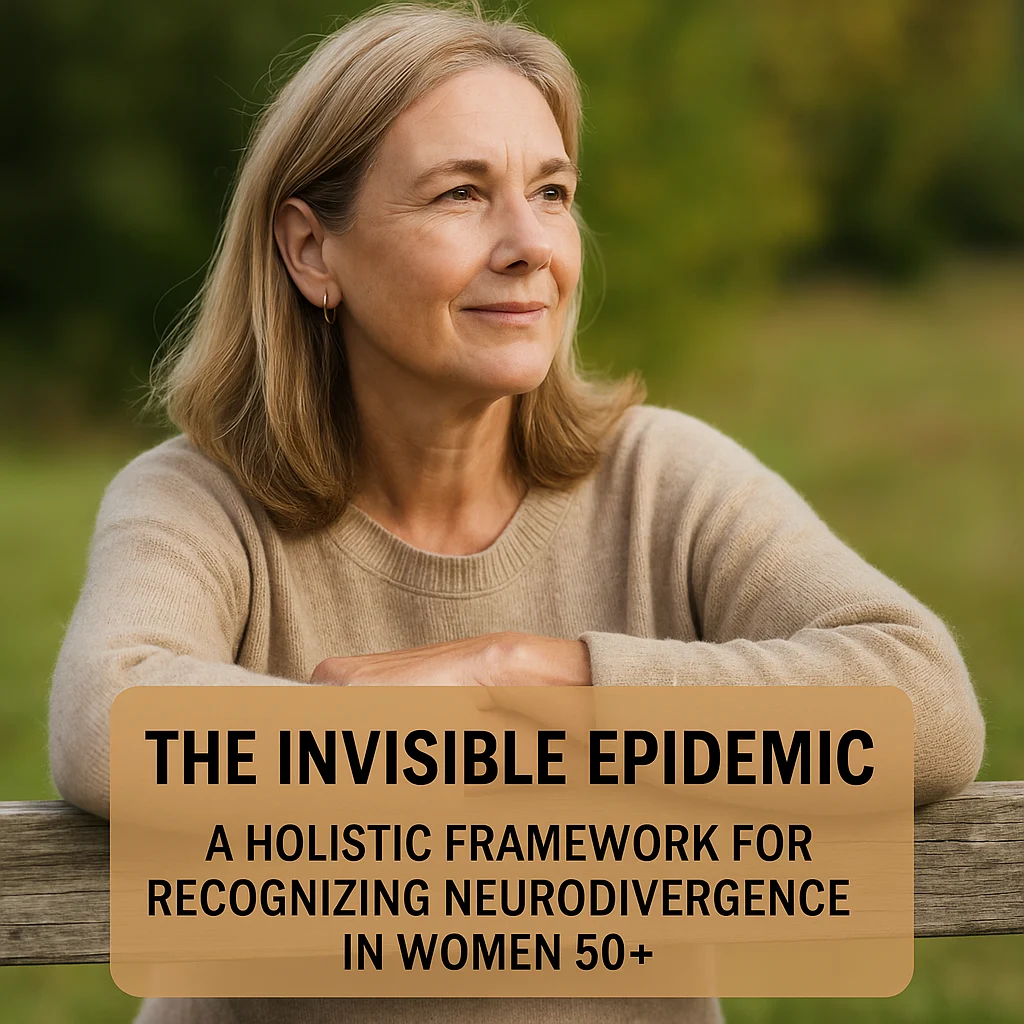
Theme: Statistics, missed diagnoses, and why women 50+ have been overlooked
Purpose: Set the context and name the gap—invite self-recognition
Includes: Stats, diagnostic bias, and first signs of recognition
Article 2: Brilliantly Wired: What They Never Told You About Your Mind
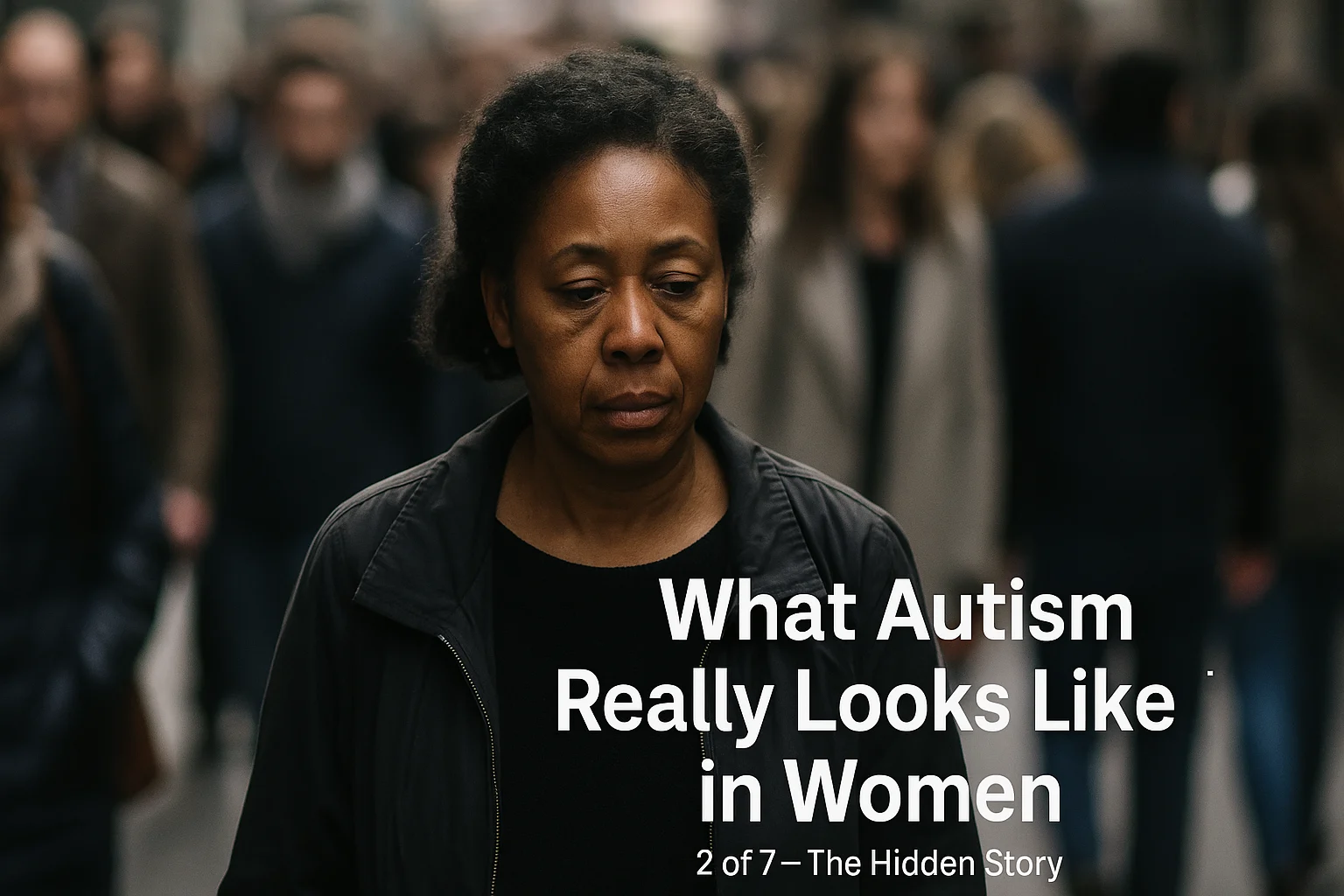
Theme: How the neurodivergent brain functions differently—and why that matters
Purpose: Normalize differences in learning, memory, processing, and emotional insight
Includes: Personal story, NLP reference, reframing “struggles” as brilliance
Article 3: The Masks We’ve Worn
Theme: Lifelong adaptation, masking, and emotional exhaustion
Purpose: Help readers recognize how they’ve coped, survived, and hidden
Includes: Traits of masking, emotional toll, signs of dissociation, chronic stress
Article 4: Building Safety So We Can Finally Breathe
Theme: Why safety is essential before unmasking and how to begin creating it
Purpose: Gently guide women toward readiness—spiritually, physically, emotionally, mentally
Includes: Signs you’ve felt unsafe, what safety looks like, how to build internal containers
Article 5: The Moment It All Starts to Make Sense
Theme: Realizing you adapted because no one told you you were different
Purpose: Introduce the power of reflection—seeing your life with new eyes
Includes: The shift from shame to self-awareness, epigenetics, spiritual layers
Article 6a: The Hidden Beliefs That Keep Us Small
Theme: Core beliefs formed from misunderstanding our traits
Purpose: Help readers uncover inherited and self-created limitations
Includes: “I’ll go crazy,” “I’m not enough,” “I’m too much,” and how these can be healed
Article 6b: Doorways to Consciousness: What the Autistic Mind Reveals
Why This Matters: The Gift of Consciousness in Neurodivergence
This piece is more than a continuation of the series—it’s an invitation to expand our understanding of consciousness itself. Neurodivergence, especially in autistic women, offers not just a different way of thinking, but a unique doorway into deeper perception, connection, and meaning. By honoring these perspectives, we reclaim the gifts hidden beneath our differences and remember that consciousness is vast, creative, and beautifully diverse.
Including this article here allows us to celebrate the sacred intelligence of the autistic mind, and to see neurodivergence not as a barrier, but as a bridge—leading us closer to wholeness, wisdom, and a more compassionate world.
Article 7: The Beliefs That Became Our Barriers — And How We Break Them
What we believe about ourselves shapes everything.
For so many women, the beliefs we absorbed—about our worth, our abilities, and our place in the world—were handed to us by systems and cultures that never truly saw us. These beliefs became invisible barriers: quiet but powerful forces that limited our freedom, dulled our voices, and made us doubt our own knowing. But beliefs are not destiny. They can be seen, questioned, and rewritten.
In this final article, we explore how old stories formed our barriers—and, most importantly, how we can break free. This is the invitation: to recognize what’s been inherited, to reclaim your truth, and to finally step beyond what no longer serves you.